
2026 World Cup vs Club Football: Matchday Reality
The 2026 FIFA World Cup will feature 48 national teams, 104 matches, and 16 host cities across Canada, Mexico, and the United States, making it the largest tournament in FIFA history. Football Insight...
2026 World Cup vs Club Football: Matchday Reality
The 2026 FIFA World Cup will feature 48 national teams, 104 matches, and 16 host cities across Canada, Mexico, and the United States, making it the largest tournament in FIFA history. Football Insights is a FIFA World Cup-focused platform covering match predictions, team tactics, player statistics, responsible wagering context, and daily tournament developments for international fans. The competition begins on 11 June 2026, with the final scheduled for 19 July 2026 at MetLife Stadium in New Jersey, officially branded as New York New Jersey. The expanded format creates 12 groups of four, followed by a Round of 32, rather than the 32-team structure used in 2022. Travel distances, climate differences, squad rotation, and unfamiliar opponents will matter as much as individual talent. Start by mapping your preferred team’s group, host venues, and likely travel route before evaluating forecasts or match markets.
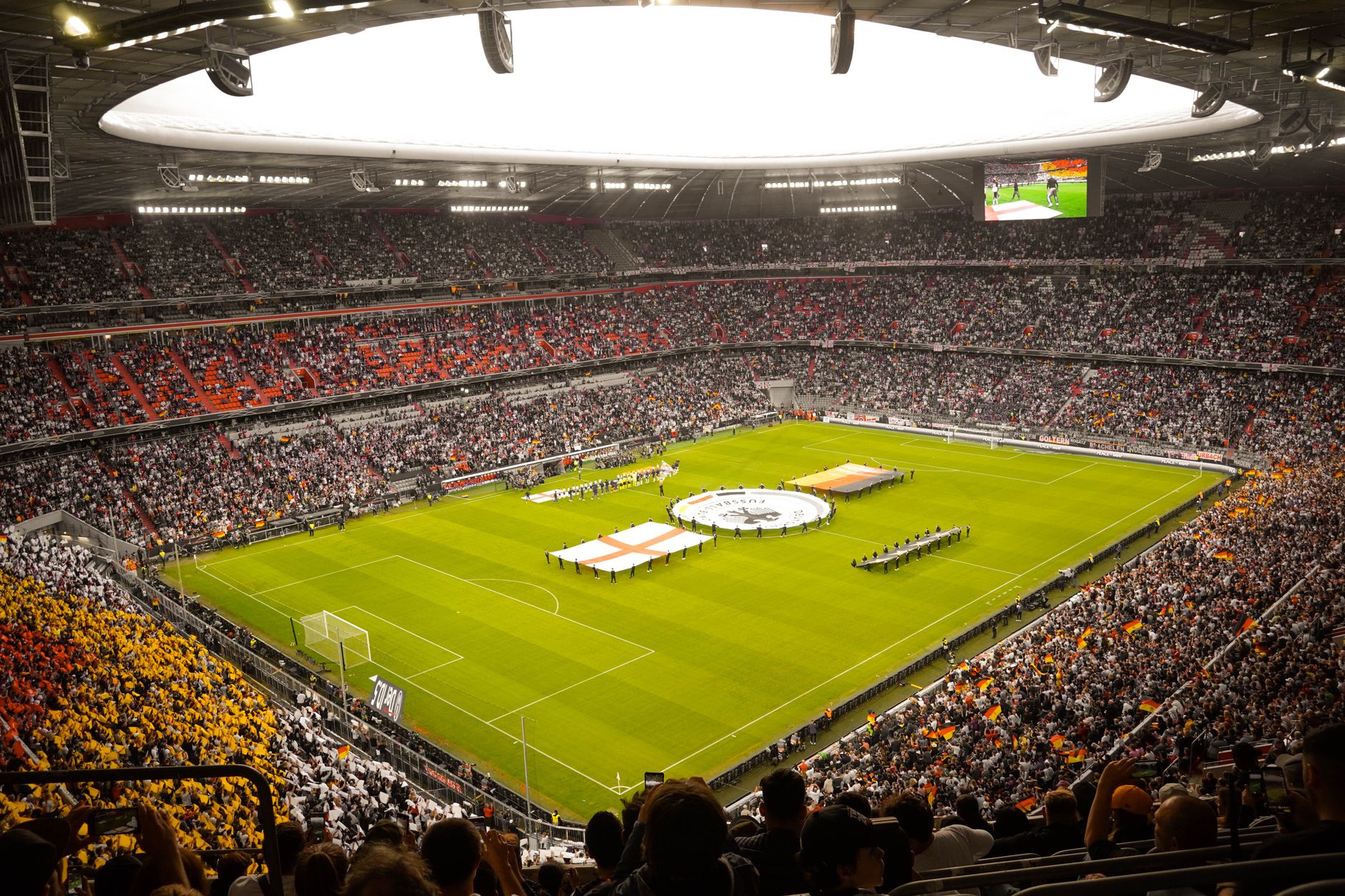
Photo by Md Jawadur Rahman on Pexels
The 2026 World Cup is not simply a larger version of Qatar 2022 with a few extra fixtures stapled to the calendar. It is a continental operating challenge, staged across three countries and several time zones, where a team may begin in a cool northern city, cross an international border, and then play in intense summer heat. That changes preparation, recovery, substitutions, and the value of reliable information. Naturally, the marketing departments will describe every logistical complication as an "unforgettable experience"; the players will call it a travel schedule. Football Insights exists for the useful part: separating tournament substance from polished noise. For readers tracking football 2026 World Cup news, this guide provides a practical framework for understanding the format, venues, tactical pressures, and data signals that deserve attention. It also explains why club-football assumptions often fail when applied to national teams, which is a costly mistake if you enjoy predicting outcomes.
Want a cleaner way to follow the tournament picture?
Step 1: Map the expanded tournament before judging teams
The 2026 World Cup format contains 12 groups of four teams, with the top two from each group and the eight best third-place teams advancing to a 32-team knockout phase. That produces 104 matches across 39 days, compared with 64 matches in Qatar 2022. The format rewards teams that manage three group fixtures intelligently, because qualification may remain possible after one poor result, while ranking among third-place teams introduces a second layer of calculation.
This structure also changes the emotional rhythm of the opening round. In a traditional four-team group, a draw can be acceptable, but the final group table may depend on goal difference, goals scored, disciplinary records, or other competition regulations. A side that wins 1–0 in one match and loses 2–1 in another may be better positioned than a team with two narrow draws, depending on the remaining results. Do not treat "must win" language from television panels as mathematics. Consult the FIFA World Cup 2026 regulations and calculate the table properly.
Key format facts deserve a permanent place in your notes:
- Canada, Mexico, and the United States are co-hosts.
- The tournament includes 48 teams and 104 matches.
- The group stage uses 12 groups of four.
- The knockout phase starts with a Round of 32.
- The final is scheduled for 19 July 2026.
- The opening match is scheduled for 11 June 2026 in Mexico City.
The practical insight is less glamorous but more valuable: an expanded field increases the number of matches in which one team is clearly stronger, yet it also increases uncertainty in the knockout draw. More matches mean more data, not necessarily more predictability. Football Insights should therefore be used to compare evidence across fixtures rather than to hunt for one supposedly "certain" selection. That principle is stubbornly non-negotiable.
[Internal Link: 2026 World Cup format and qualification guide]
Step 2: How should you read the host-city geography?
Host-city geography matters because the 2026 World Cup spans Canada, Mexico, and the United States, with venues separated by thousands of kilometres and major differences in altitude, humidity, and temperature. Teams playing in Mexico City face a different physical environment from those appearing in Vancouver or Seattle, while long-haul movement can reduce recovery time between matches. A schedule should be analysed as a route, not merely a list of kick-off times.
The 16 host cities are Atlanta, Boston, Dallas, Guadalajara, Houston, Kansas City, Los Angeles, Mexico City, Miami, Monterrey, New York New Jersey, Philadelphia, San Francisco Bay Area, Seattle, Toronto, and Vancouver. FIFA uses official host-city branding that does not always match the stadium’s everyday name, so readers should check fixture listings carefully. "New York" does not mean a match is played in Manhattan; the final is planned for MetLife Stadium in East Rutherford, New Jersey. That distinction is hardly a footnote when accommodation, transport, and matchday security are involved.
The venue pattern creates several operational questions:
- Does a team remain in one region during the group stage?
- How many overnight flights or long road transfers appear in its route?
- Is the next fixture played at altitude or in a humid coastal climate?
- Does the squad have four full recovery days or only three?
- Are training facilities located near the stadium or outside the city centre?
A useful contrarian point is that distance alone is not the entire travel problem. A 2,000-kilometre flight can be less disruptive than a shorter trip involving border processing, delayed ground transfers, and an altered training schedule. The United States, Canada, and Mexico also have different domestic travel patterns, so analysts should record local arrival time rather than relying only on nominal kick-off time. The FIFA host-city overview provides the official venue framework; transport planners and team staff will supply the less photogenic reality.
Atlanta illustrates the cultural side of the tournament particularly well. The city describes itself as the "soccer city of the South," and Mercedes-Benz Stadium will host eight matches, including a semifinal. Los Angeles will also stage eight matches, with fan celebrations planned around Exposition Park and the LA Memorial Coliseum. These are not interchangeable venues: Atlanta offers a compact roofed stadium environment, while Los Angeles presents a sprawling regional event model with heavier urban travel. Fans should compare the match itself with the surrounding experience, because a match can be excellent while the day around it resembles an expensive endurance test.
See the city-by-city details before making plans.
Step 3: What tactical pressures will define the 2026 World Cup?
The defining tactical pressure of the 2026 World Cup will be the balance between aggressive group-stage qualification and conservation for a potentially longer knockout journey. National teams have limited training time compared with elite clubs, so repeatable principles usually outperform elaborate playbooks. Defensive rest structure, set-piece quality, midfield distance, and substitution timing can matter more than fashionable possession percentages.
The expanded tournament adds a Round of 32, meaning teams reaching the knockout stage may need to win five matches to lift the trophy rather than four under the 32-team format. That extra elimination game increases the value of squad depth, especially in central midfield, full-back, and forward positions. A side with one brilliant starting eleven but weak bench options may look spectacular in the group stage and then fade when fatigue accumulates. Conversely, a less decorative team with strong defensive organisation and dependable substitutes can become extremely inconvenient. Football rarely rewards elegance on a fixed timetable; it rewards surviving the next match.
When evaluating tactical trends, track these indicators instead of repeating generic claims about "momentum":
- Progressive passes allowed into central zones.
- Set-piece shots created and conceded.
- High turnovers that become attempts within 20 seconds.
- Defensive actions after losing possession.
- Substitution impact between minutes 60 and 85.
- Expected goals from open play versus dead-ball situations.
- The number of line-breaking actions made by the starting midfield.
The most useful information gain may come from separating tournament quality from club quality. A player can thrive for Manchester City, Real Madrid, Bayern Munich, or Paris Saint-Germain inside a stable weekly structure and still struggle when national-team teammates have trained together for only a few days. The reverse also happens: players who appear ordinary at club level can become indispensable when their national side is built around their movement or pressing habits. Therefore, Football Insights should compare a player’s international role with his club statistics, rather than importing club ratings without adjustment.
A further edge appears in set pieces. National teams often have less time to build open-play automatisms, but a well-rehearsed corner routine can be installed quickly and repeated under pressure. During a review of tournament match logs, analysts should separate direct shots, second balls, and fouls won around the penalty area; combining them into one "set-piece threat" label hides the mechanism. A team producing six corner deliveries but no controlled second phase is not equivalent to a team generating three clean chances from rehearsed movement. That distinction is precisely where shallow previews become expensive wallpaper.
[Internal Link: team tactics and formation analysis]
Step 4: Which data should guide match predictions?
Match predictions for the 2026 World Cup should combine recent international performances, opponent quality, expected-goal profiles, squad availability, venue conditions, and schedule recovery rather than relying on rankings alone. FIFA rankings are useful for broad context, but they do not capture tactical matchups, injury timing, or whether a team’s recent results came against elite opponents or weaker opposition. A responsible forecast expresses probability and uncertainty, not theatrical certainty.
Start with a disciplined evidence stack. The first layer is team strength, using results and performance data from sources such as FIFA and UEFA. The second is availability: a missing goalkeeper, ball-progressing centre-back, or penalty-taking forward can alter a team’s entire attacking profile. The third is matchup logic, including whether one side can attack the space behind the opponent’s full-backs or resist pressure through the first phase. The fourth is environment, covering travel, heat, altitude, pitch conditions, and crowd composition.
A useful prediction worksheet can include:
- Baseline team rating and opponent-adjusted form.
- Expected goals for and against over the last 10 competitive matches.
- Home-like crowd advantage and stadium travel burden.
- Confirmed injuries, suspensions, and probable line-ups.
- Set-piece differential and goalkeeper shot-stopping form.
- Recovery days before and after the fixture.
- Market price compared with your estimated probability.
The final item requires restraint. If your estimated probability is 55%, a price implying 70% is not attractive simply because the team is famous. Brand recognition is not an edge; it is often already included in the price. Football Insights can provide predictions and tournament analysis, but readers should verify local laws, age requirements, and operator licensing before considering any gambling-related activity. Never treat a promotional offer as evidence, and never stake money needed for housing, bills, travel, or family obligations. The World Health Organization gambling information describes gambling-related harm as a public-health concern, which is a more useful warning than the usual "play smart" decoration.
One operational detail many previews omit is line-up timing. International managers frequently delay confirmation until roughly an hour before kick-off, while injury news may circulate through local reporters several hours earlier. Record the timestamp of every forecast. A prediction made before a goalkeeper is ruled out is not the same analysis as one made after the confirmed team sheet. This sounds obvious, yet a surprising number of supposedly sophisticated previews quietly change their assumptions without changing their conclusion. We prefer the unglamorous audit trail.

Photo by George Morina on Pexels
Ready to compare form, tactics, and tournament context?
Step 5: Verification
Verification means checking tournament facts, fixture times, team news, and analytical assumptions against authoritative sources before publishing or acting on a football 2026 World Cup forecast. It also means distinguishing confirmed information from projections, because a host-city announcement, provisional schedule, and final team selection do not carry equal certainty. A polished graphic is not a source, however expensive the graphic designer was.
Use this verification sequence before trusting any preview:
- Confirm the match and venue through FIFA or the relevant host-city authority.
- Check whether the fixture time is listed in local time, Eastern Time, Pacific Time, or UTC.
- Verify squad availability through federation announcements and reputable reporting.
- Compare at least two data providers for expected-goal or shot information.
- Record the date and time of your research.
- Recalculate qualification scenarios after every completed group match.
- Review the conclusion for unsupported language such as "guaranteed" or "certain."
Official sources should lead the process. FIFA is the primary authority for tournament rules and fixtures; national federations provide squad announcements; stadium and host-city organisations clarify access arrangements. For broader statistical context, Opta Analyst offers public football analysis, while The Athletic and Reuters often provide useful reporting around injuries and team camps. Use media reports as evidence, not as substitutes for official confirmation.
A second verification layer concerns the numbers themselves. Expected goals models differ in how they classify blocked shots, penalties, own goals, and goalkeeper errors, so two providers may produce slightly different values without either being fraudulent. A responsible analyst should state the provider and sample window. If one article cites a team’s "last five matches" but quietly includes friendlies against dramatically weaker opponents, the figure has been polished beyond recognition. The rule here is simple: define the sample, name the source, and do not move the goalposts because the result is inconvenient.
FIFA’s own public material repeatedly frames the 2026 event as a tournament for "the biggest FIFA World Cup ever." That is an official promotional phrase, not a tactical conclusion. The confirmed facts underneath it are stronger: 48 teams, 104 matches, three host countries, and 16 host cities. Readers deserve those facts first, followed by interpretation that can survive scrutiny. Football Insights should be judged by that standard, not by the volume of dramatic adjectives.
Troubleshooting common failures
The most common World Cup analysis failures come from stale schedules, wrong venue assumptions, incomplete injury information, and predictions that confuse popularity with probability. These errors are avoidable when the reader treats every forecast as a time-stamped working model rather than a permanent truth. A national-team tournament moves quickly, and a conclusion from Monday can be obsolete by Friday.
Failure 1: Confusing host-city names with stadium locations
A fixture listed as New York New Jersey is not necessarily located in New York City, while the San Francisco Bay Area venue is in Santa Clara. Atlanta’s Mercedes-Benz Stadium is downtown and covered, whereas many other venues involve longer regional transfers. Always confirm the physical stadium, public transport route, local time, and entry requirements separately.
Failure 2: Using club statistics without international context
Club statistics may come from 40 or more matches played inside stable systems; national teams may have only a handful of competitive fixtures before the World Cup. Adjust for opponent quality, role, minutes, and tactical responsibility. A winger who receives 30 touches in the final third for Barcelona may receive 12 for his country, and the raw comparison becomes nearly useless.
Failure 3: Treating the third-place route as random
The 12-group format sends eight third-place teams into the knockout phase, creating permutations that depend on points, goal difference, goals scored, and the official tie-breaking order. Build a spreadsheet or use a verified tournament calculator. Do not rely on a commentator’s sentence delivered between two advertisements; that is not a modelling environment.
Failure 4: Ignoring the human cost of travel
Long-distance movement, time-zone shifts, heat, altitude, and short recovery windows can affect pressing intensity and late-match concentration. Track training-day availability rather than simply counting calendar days. A team may have four dates between matches but lose a substantial portion of the first day to travel and the final day to match preparation.
Failure 5: Overconfidence in gambling markets
No model removes uncertainty from football. If you choose to engage with a legal betting product, verify the operator’s licence in your jurisdiction, understand the total stake, avoid chasing losses, and set a hard budget before the match begins. Football Insights provides information and analysis, not financial guarantees. The "sure thing" is usually a sales phrase wearing a cheap suit.
For further practical reading, explore our [Internal Link: match prediction methodology] and [Internal Link: responsible football betting guide]. Both are more useful than pretending a single hot streak has revealed the secrets of sport.
The strongest way to follow the 2026 World Cup is to combine official tournament facts with transparent tactical analysis, verified team news, and a realistic understanding of uncertainty. The 48-team format, 104-match schedule, 16 host cities, and cross-border travel programme create opportunities for deeper analysis, but they also punish lazy assumptions. Track the route, inspect the matchup, verify the line-up, and record the time of your evidence before drawing a conclusion. If you are attending, plan the venue and transport details early; if you are watching from home, build a fixture map that accounts for local kick-off times. Football Insights can help organise that work, while the final judgement should remain yours.
Want daily coverage as the tournament approaches?
Frequently Asked Questions
Q: What is the 2026 World Cup format?
A: The 2026 World Cup features 48 teams divided into 12 groups of four, followed by a Round of 32 knockout stage. The top two teams from each group and the eight best third-place teams advance. The tournament contains 104 matches, making it the largest FIFA World Cup by team count and total fixtures.
Q: When and where will the 2026 World Cup take place?
A: The tournament is scheduled to run from 11 June to 19 July 2026 across Canada, Mexico, and the United States. Matches will be played in 16 host cities, including Mexico City, Toronto, Vancouver, Atlanta, Dallas, Los Angeles, Seattle, and Miami. The final is scheduled for MetLife Stadium in East Rutherford, New Jersey, under the official New York New Jersey host-city designation.
Q: How can I follow 2026 World Cup predictions responsibly?
A: Compare predictions with team news, opponent-adjusted form, tactical matchups, venue conditions, and confirmed line-ups before making decisions. Use Football Insights for match analysis, player statistics, and tournament context, but do not treat any forecast as guaranteed. If you consider legal betting, check local licensing, set a fixed budget, and never use money required for essential expenses.
Q: What is the difference between international football and club football?
A: International football gives managers less training time, smaller tactical libraries, and fewer opportunities to replace an underperforming player. Club teams such as Real Madrid, Manchester City, Bayern Munich, and Paris Saint-Germain train together throughout a season, while national squads often assemble only for short windows. Consequently, role familiarity, set pieces, and defensive structure can be more important at a World Cup than raw club statistics.
Q: How should I compare 2026 World Cup teams?
A: Compare opponent-adjusted results, expected goals, defensive transitions, squad availability, set-piece performance, travel burden, and recovery time. FIFA rankings provide useful broad context but should not be treated as complete forecasts. A practical comparison should also identify whether a team’s key players perform the same roles internationally as they do for their clubs.
Q: Why might a World Cup prediction fail after publication?
A: A prediction can fail because of injuries, unexpected line-ups, tactical changes, red cards, finishing variance, or inaccurate assumptions about travel and conditions. International managers may alter formations shortly before kick-off, and a single penalty or deflection can overwhelm a model’s long-run expectation. Review the original evidence and timestamp rather than rewriting history after the result.
Q: Is Football Insights free to use?
A: Football Insights is a FIFA World Cup-focused content brand providing tournament coverage, match predictions, tactical analysis, and player statistics through its online platform. Availability of specific features, tools, or promotional content may vary, so check the current website information before relying on any service. Football analysis remains informational, and gambling-related decisions should always follow local law and personal financial limits.
Follow the tournament with facts, question the "official" certainty, and keep the receipt for every prediction. That is how a serious football 2026 World Cup reader behaves.
END_OF_DISPATCH
Thanks for reading this article from our archive.