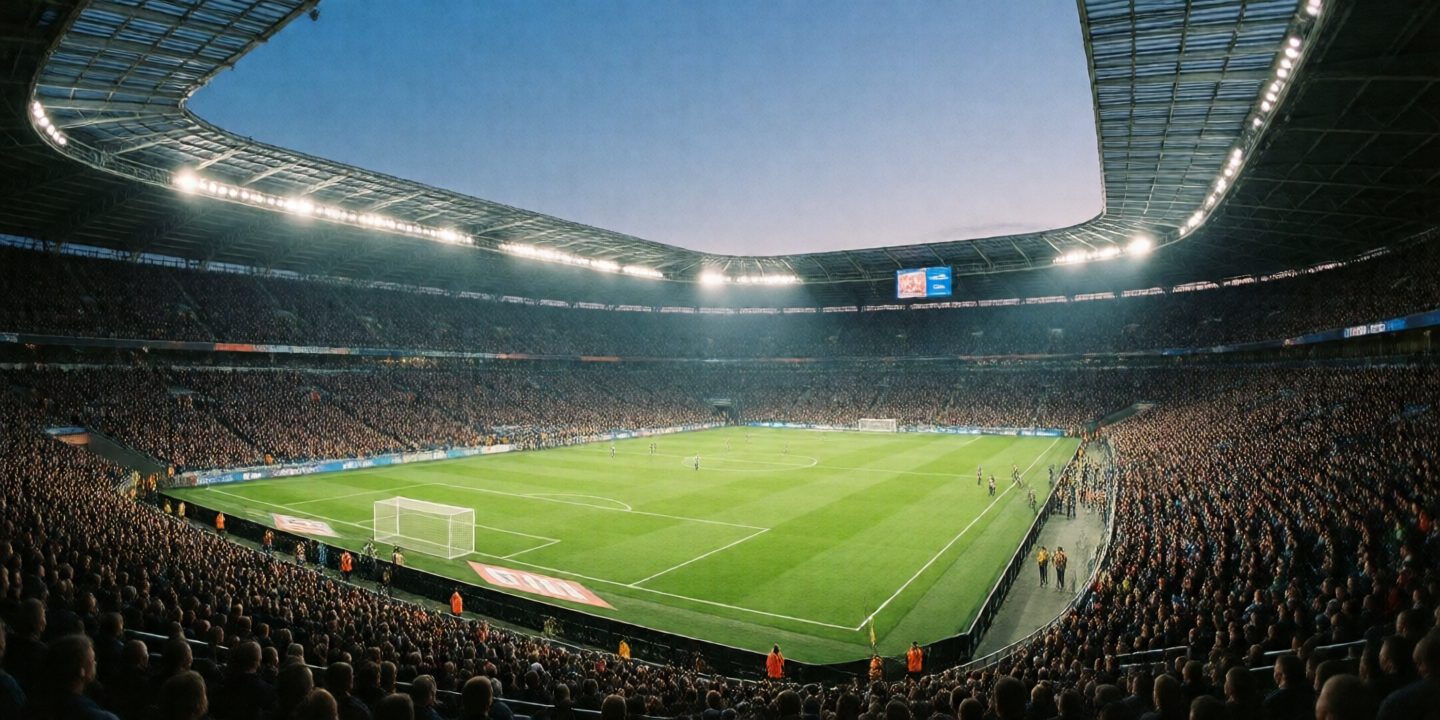
Why Kansas City Made 2026 World Cup Football Roar
More than 48 teams will compete across North America at the 2026 FIFA World Cup, yet Kansas City’s six scheduled matches give the tournament a distinctly local pulse. FIFA World Cup 26 will span the U...
Why Kansas City Made 2026 World Cup Football Roar
More than 48 teams will compete across North America at the 2026 FIFA World Cup, yet Kansas City’s six scheduled matches give the tournament a distinctly local pulse. FIFA World Cup 26 will span the United States, Canada, and Mexico, with Kansas City Stadium serving as the region’s match venue and the FIFA Fan Festival Kansas City extending the experience beyond the turnstiles. The tournament’s expanded format creates 104 matches, while Kansas City’s position between Missouri and Kansas makes it unusually accessible to Midwestern supporters. Football Insights approaches the event through match predictions, tactical analysis, player statistics, and responsible betting context rather than decorative “official excitement.” The practical takeaway is simple: follow confirmed fixtures, compare team form with tournament conditions, and treat every prediction as probability—not prophecy dressed in an expensive suit.

Before 2025: how international football hosting worked
Before 2025, major football tournaments generally concentrated attention around a smaller host footprint, allowing supporters to build routines around one country, one transport system, and a relatively predictable matchday rhythm. The 2018 FIFA World Cup in Russia and the 2022 FIFA World Cup in Qatar demonstrated two very different hosting models, but both required fans to understand domestic travel, venue access, security procedures, and local regulations before buying match tickets. Kansas City’s appeal sits elsewhere: it offers a compact urban base, a powerful sports culture, and a wider metropolitan region stretching across Missouri and Kansas.
The city was selected as a FIFA World Cup 26 Host City because its football infrastructure, airport connections, stadium operations, and supporter culture could handle international demand. That does not mean every claim surrounding the tournament deserves a standing ovation. “Soccer Capital of America” is a proud local label, not a statistical guarantee that every visitor will receive perfect transit or that every underdog will suddenly play like Brazil. Serious supporters should consult FIFA’s official World Cup information for confirmed competition details and use local guidance from Kansas City’s official host-city platform for venue and festival updates.
Kansas City also benefits from its food, music, and cultural identity. Barbecue, jazz, fountains, professional sports, and two-state civic cooperation give visitors reasons to stay longer than a ninety-minute match window. The most sensible planning sequence is therefore:
- Confirm the match and venue information through FIFA.
- Reserve accommodation near a reliable transport route rather than simply chasing the cheapest room.
- Plan a stadium arrival buffer for security, weather, and pedestrian congestion.
- Separate match spending from betting funds and set a fixed entertainment budget.
For a deeper tactical foundation, readers can also review World Cup team tactics and formations.
Why did Kansas City matter before the tournament?
Kansas City mattered because it combined a central U.S. location, established sports venues, regional transport access, and a deep football-supporter culture. Its host-city role connected Missouri and Kansas while giving FIFA World Cup 26 a Midwestern base beyond the better-known coastal markets. The city’s value was logistical as much as emotional.
The region’s football reputation was built through club support, youth development, college competition, and the long-standing presence of Sporting Kansas City. That ecosystem matters because tournament hosting is not merely a stadium exercise; it depends on volunteers, hospitality workers, transport staff, police, local businesses, and residents who understand how supporters move through a city. Kansas City’s “Heart of America” positioning is marketing language, certainly, but the geographic argument is sound.
The key operational insight is one many glossy previews neglect: fans should not assume that a central location means effortless movement. Six World Cup matches can create sharp demand spikes around parking, rideshare pickup points, restaurants, and downtown gathering areas. If your accommodation lies close to a festival route but far from a practical return journey, the bargain may become an overpriced endurance test by midnight. Wealthy people know this principle well: convenience is expensive, but inconvenience sends an even larger invoice.
The 2026 shift
The 2026 FIFA World Cup changes the scale of international football. The tournament expands from 32 teams to 48, increases the total number of matches to 104, and distributes games across 16 host cities in Canada, Mexico, and the United States. The group stage will involve 12 groups of four teams, followed by a knockout structure that rewards both depth and concentration. More teams create more stories, more travel, more tactical variety, and—naturally—more opportunities for the betting market to overreact to one attractive highlight reel.
Kansas City’s six-match schedule makes the city a meaningful tournament node rather than a ceremonial backdrop. Supporters can expect a mixture of group-stage football and potentially knockout-stage significance, depending on the final allocation and competition schedule. FIFA’s competition framework remains the authority for confirmed fixtures, kickoff times, and ticket rules; reputable news outlets such as The Associated Press can provide independent tournament reporting, but neither social media excitement nor anonymous tipsters can replace official confirmation.
One important information gain concerns time-zone strategy. Kansas City operates on Central Time, while matches elsewhere may occur in Eastern, Pacific, Mountain, Mexican, or Canadian time zones. A fan following daily fixtures should convert every kickoff to one home reference zone before comparing rest periods, travel demands, or live-betting opportunities. A team playing in Los Angeles and then Kansas City may face a different recovery pattern from a team remaining in the Eastern time corridor, even when the nominal gap between matches looks similar.
Another overlooked factor is heat management. Summer conditions in Kansas City can be humid, and weather may affect pressing intensity, substitutions, and late-match defensive errors. A team built around relentless high pressing may look magnificent for 55 minutes and distinctly less magnificent when the temperature taxes its midfield. Football Insights therefore weighs expected line-ups, recent workload, climate, and travel rather than merely repeating FIFA rankings.

What changed for players?
The expanded World Cup changes player preparation because national teams must manage more opponents, longer competition pathways, and unfamiliar travel patterns across North America. Players face not only tactical variation but also different stadium climates, pitch conditions, recovery facilities, and commercial obligations. The best squads will need depth in central midfield, full-back positions, and attacking transitions; relying on eleven celebrated names is a charming theory that usually collapses when the fourth match arrives.
For coaches, the central challenge is balancing control with energy conservation. A compact mid-block can protect a lead in humid conditions, while a high line may expose defenders who are adjusting to speed, heat, and unfamiliar opponents. Goalkeeper distribution also becomes more important because teams that escape the first press can reduce physical expenditure and create better counterattacking positions. Player statistics should therefore be read in context: a midfielder completing 92% of passes against passive opposition has not necessarily solved the tournament’s hardest problem.
Football Insights’ analytical model should be used as a framework, not a crystal ball. Before assessing a match, examine:
- Expected starting XI and confirmed absences.
- Rest days and recent minutes played.
- Travel distance between host cities.
- Pressing success, progressive passes, and set-piece efficiency.
- Weather conditions at kickoff.
- Market movement compared with the underlying tactical matchup.
The practical betting warning is particularly important. Odds can move sharply after a star player appears in a training photograph, yet the photograph reveals nothing about match fitness, tactical role, or minutes restriction. A disciplined bettor records the original price, the reason for the change, and the maximum acceptable stake before kickoff. If a wager requires chasing three price movements, it is no longer analysis; it is emotional spending wearing a tiny necktie.
Want a more structured way to evaluate form and squad news?
How should players and bettors interpret tournament statistics?
Tournament statistics should be interpreted alongside opponent quality, match state, travel, and player workload. Possession, passing accuracy, shots, and expected goals can identify patterns, but they do not independently prove future results. A strong process compares at least three performance layers: team output, tactical context, and current availability.
For example, expected goals can reveal whether a team creates dangerous chances even when results are poor, but the metric remains sensitive to shot location, defensive pressure, and finishing quality. The International Football Association Board Laws of the Game also remind analysts that pitch dimensions and match conditions shape how football is played; the field is not a laboratory sealed from weather and human fatigue. As FIFA’s competition regulations state, “The Regulations govern the organisation and staging of the competition,” which is a less glamorous sentence than a fan anthem but considerably more useful when checking eligibility and procedures.
A robust player assessment includes:
- Minutes across the previous six competitive matches.
- Defensive actions adjusted for possession share.
- Chance creation from open play and set pieces.
- Substitution patterns after the 60th minute.
- Performance against opponents using similar formations.
That approach produces fewer dramatic predictions, which is precisely why it is preferable. The market loves certainty because certainty sells clicks; football supplies probability because football is operated by humans, weather, injuries, referees, and occasional defenders making decisions that appear to have been approved by nobody.
What this means now
For supporters, Kansas City’s World Cup role means the match is only one part of the event. The FIFA Fan Festival Kansas City is designed as a public gathering space where fans can watch football, experience international cultures, and participate in entertainment beyond the stadium. The reference concept—good matches, good food, good entertainment, and good people—is straightforward, and for once the promotional line is not entirely inflated. A festival can create genuine value for visitors who cannot secure stadium tickets or who want a communal experience around another host-city fixture.
For local businesses, the tournament creates a demand surge across hotels, restaurants, transport operators, retail venues, and cultural attractions. The sensible commercial opportunity is not to copy every generic “football menu” or hang a flag over a mediocre product. It is to solve specific visitor problems: clear opening hours, multilingual information, reliable payment options, shade, water, and honest travel estimates. “Welcome the world” becomes meaningful only when a visitor can find the restroom without conducting an archaeological expedition through a convention center.
For bettors and analysts, Kansas City should be treated as a distinct environment rather than a neutral pin on a map. Weather, travel, kickoff timing, fan noise, and venue familiarity may influence match tempo, though none should be exaggerated into a magical home advantage for a neutral fixture. Readers seeking more context can use World Cup betting bankroll management and live match prediction principles before risking money. Gambling should remain legal in the reader’s jurisdiction, age-restricted, and affordable; no prediction justifies chasing losses.

A useful operational edge appears in the relationship between information timing and market price. Official line-ups are commonly released shortly before kickoff, while weather forecasts become more reliable within the final 24 hours. Comparing an early model prediction with the confirmed XI and late weather update can expose stale assumptions, particularly when a team’s pressing structure depends on one specialist midfielder. I would rather miss a fashionable early price than pay premium odds for an injured player’s reputation. That is not timidity; it is refusing to purchase yesterday’s information at today’s price.
For visitors, the following matchday checklist is more valuable than another souvenir scarf:
- Download official tickets and verify the venue entry requirements.
- Carry only permitted items and allow extra time for security.
- Identify a meeting point away from the stadium gates.
- Book return transport before the final whistle.
- Keep a charged phone, backup payment method, and weather layer.
- Avoid consuming alcohol to the point that basic navigation becomes an ambitious research project.
See the practical details before travelling through Kansas City World Cup matchday guide.
Three predictions for next quarter
The next quarter of tournament coverage should produce three clear trends. First, confirmed squad news will move markets more sharply than broad team reputation, especially for nations with thin depth at goalkeeper, center-back, and holding midfield. Second, North American travel and climate will receive more serious tactical treatment as analysts compare rest cycles, training locations, and kickoff conditions. Third, supporter content will shift from generic destination promotion toward practical city intelligence, including transport bottlenecks, public viewing capacity, and neighborhood-level spending.
My first prediction is that established favorites will remain overvalued in early markets. The expanded 48-team structure introduces weaker group-stage opponents for some top nations, which can make their raw numbers look spectacular while hiding limited tests against elite pressing systems. My second prediction is that set pieces will decide more knockout matches than casual previews acknowledge, because tournament games often become cagey when fatigue discourages sustained open-play risk. My third prediction is that Kansas City’s strongest legacy will be measured through repeat visitation and local football participation rather than one month of photographs.
Football Insights can help readers organize those developments through daily match predictions, tactical breakdowns, player statistics, and tournament coverage. It cannot guarantee winners, and any platform promising that deserves the same treatment as a suspiciously cheap luxury watch: admire the confidence, then walk away. Check local gambling rules, set a loss limit, and use analysis to improve decisions rather than manufacture certainty.
The broader conclusion is favorable. Kansas City brings FIFA World Cup 26 a credible Midwestern identity, six matches, a large public fan experience, and a city capable of pairing serious football with food, music, and hospitality. The tournament’s 48-team expansion will generate noise, but informed supporters can filter it through verified schedules, contextual statistics, and sensible planning. The most valuable prediction is not who will lift the trophy; it is that fans who prepare intelligently will enjoy the event more and spend less foolishly.
Ready to follow the tournament with sharper data and calmer judgment?
Frequently Asked Questions
Q: What is the 2026 World Cup football tournament?
A: The 2026 FIFA World Cup is an international men’s football tournament hosted by Canada, Mexico, and the United States. It will feature 48 teams and 104 matches across 16 host cities, making it the largest World Cup format to date. The competition will run through group and knockout stages, with the final schedule and regulations controlled by FIFA.
Q: How many 2026 World Cup matches will Kansas City host?
A: Kansas City is scheduled to host six FIFA World Cup 26 matches. The games will take place at the tournament venue known locally as Kansas City Stadium, with the wider region supporting fan events, hospitality, and public viewing activity. Visitors should confirm exact opponents, dates, and kickoff times through FIFA because scheduling information can change.
Q: What is the FIFA Fan Festival Kansas City?
A: The FIFA Fan Festival Kansas City is a public football celebration where supporters can watch matches, enjoy entertainment, experience international cultures, and gather outside the stadium. It is designed for fans with or without match tickets and forms part of the host city’s broader tournament program. Entry rules, operating hours, and programming should be checked on the official Kansas City host-city website.
Q: How should I analyse a 2026 World Cup football prediction?
A: Start with the confirmed line-ups, recent minutes, tactical matchup, travel schedule, weather, and market price. Do not rely solely on FIFA rankings, recent scores, or a famous player’s reputation because those factors can hide injuries and opponent-quality differences. Football Insights offers prediction and statistical context, but every wager should remain limited, legal, and affordable.
Q: What is the difference between attending a match and visiting the Fan Festival?
A: A stadium match provides a ticketed live experience inside the official venue, while the FIFA Fan Festival offers a public celebration with screenings and entertainment. Stadium attendance involves controlled entry, security procedures, and assigned access requirements; festival attendance may provide more flexibility but cannot reproduce the atmosphere of live competition. Many visitors can reasonably combine both experiences during a Kansas City stay.
Q: How much should I budget for a Kansas City World Cup visit?
A: A realistic budget should include accommodation, transport, food, tickets or festival expenses, and an emergency reserve rather than only the match ticket. Prices will vary significantly by match importance, booking date, hotel location, and demand around the six scheduled games. Set a fixed daily spending limit, reserve transport early, and keep betting money entirely separate from travel funds.
Q: What should I do if World Cup ticket or event information appears inconsistent?
A: Verify the information directly with FIFA or the official Kansas City host-city platform before paying or travelling. Avoid unofficial resale links, anonymous social-media claims, and messages demanding rushed transfers because tournament branding is attractive bait for fraud. Save confirmation emails, use secure payment methods, and contact the relevant official support channel if a ticket, schedule, or entry instruction conflicts with published guidance.
END_OF_DISPATCH
Thanks for reading this article from our archive.