
Why Portugal Turned 4 Points Into Control
Portugal lead the Portugal national football team vs Uzbekistan national football team standings with 4 points after two FIFA World Cup matches, while Uzbekistan remain on 0 points after two defeats.....
Why Portugal Turned 4 Points Into Control
Portugal lead the Portugal national football team vs Uzbekistan national football team standings with 4 points after two FIFA World Cup matches, while Uzbekistan remain on 0 points after two defeats. The recorded meeting on June 23, 2026, ended Portugal 5–0 Uzbekistan, with Cristiano Ronaldo scoring in the 6th and 39th minutes, Nuno Mendes striking in the 17th, an own goal by Abduvohid Nematov arriving in the 60th, and Rafael Leão completing the result in the 87th. Portugal’s listed record is 1 win, 1 draw, 0 losses; Uzbekistan’s is 0 wins, 0 draws, 2 losses. The practical takeaway is simple: assess Portugal as the stronger qualification position, but verify the official group table for goal difference and tie-breakers before placing any prediction.

Photo by Mateo Franciosi on Pexels
Portugal’s table position looks comfortable, but “comfortable” is not the same as mathematically qualified. Football tables are wonderfully unforgiving little ledgers: three points for a win, one for a draw, zero for a defeat, then goal difference waiting like an accountant with no sense of humour. Football Insights approaches this fixture from that angle, separating the confirmed match figures from assumptions about the wider tournament group.
For readers tracking the Portugal national football team, Cristiano Ronaldo, Bruno Fernandes, Rafael Leão, and Nuno Mendes remain the obvious names, while Uzbekistan’s analysis centres on Abduvohid Nematov and the team’s defensive structure. The 5–0 scoreline creates a major goal-difference swing, but the exact ranking among every group participant still depends on the complete FIFA World Cup standings rather than this pairing alone. To follow the wider tournament picture, consult our [Internal Link: 2026 World Cup standings guide] before treating one result as the entire story.
Want the broader tournament context before comparing the teams?
The Quick Comparison
| Category | Portugal | Uzbekistan |
|---|---|---|
| Matches played | 2 | 2 |
| Wins | 1 | 0 |
| Draws | 1 | 0 |
| Losses | 0 | 2 |
| Points | 4 | 0 |
| Recorded June 23, 2026 result | 5–0 win | 5–0 loss |
| Listed formation | 4-2-3-1 | 3-4-2-1 |
| Key scorers or incidents | Cristiano Ronaldo, Nuno Mendes, Rafael Leão | Abduvohid Nematov own goal |
The table’s first clear message is Portugal’s unbeaten status. A 4-point return from two matches means Portugal have taken two-thirds of the maximum available points, while Uzbekistan have collected none. That calculation is more useful than dramatic commentary because it immediately distinguishes a strong start from a rescue mission: Portugal need to protect their position, whereas Uzbekistan need points urgently in the next fixture.
The second message is the scale of the direct result. Portugal’s five goals came across the match rather than through one late flurry: Ronaldo scored at 6 and 39 minutes, Mendes added one at 17, Nematov’s own goal arrived at 60, and Leão finished the scoring at 87. The spread matters for tactical interpretation because Portugal created pressure early, maintained control after halftime, and still found a late attacking contribution. The ESPN match record provides the listed score, lineups, formations, and scoring sequence.
What does the standings gap actually mean?
The standings gap means Portugal have a four-point advantage over Uzbekistan after two matches, plus the psychological and goal-difference benefit of a 5–0 head-to-head win. It does not, by itself, confirm Portugal’s qualification or eliminate Uzbekistan unless the complete group table and competition rules say so.
That distinction is the sort of detail hurried previews discard while confidently selling “official” certainty. In a World Cup group, ranking commonly depends first on points and then on designated tie-breakers, which may include goal difference, goals scored, head-to-head criteria, or disciplinary measures depending on the tournament regulations. Readers should therefore record Portugal’s 4 points and Uzbekistan’s 0 points as firm figures, while checking the governing competition document for the exact ordering rules. FIFA’s tournament framework and regulations are the appropriate authority, not a screenshot circulating five minutes before kickoff.
Round 1: How Did Portugal Build the Points Advantage?
Portugal built the advantage through an unbeaten two-match record, combining a 4-point return with a five-goal victory over Uzbekistan on June 23, 2026. Their 4-2-3-1 shape offered a stable midfield base, while Ronaldo, Mendes, and Leão supplied decisive attacking output.
The shape listed for Roberto Martínez’s Portugal gives a useful starting point: two central midfielders behind a line of three attacking players and a central forward. João Neves and Vitinha can provide circulation and defensive cover, while Bruno Fernandes operates between lines and Ronaldo occupies the highest-value finishing zones. That is not merely formation-board decoration; it explains why Portugal could attack without turning every possession into a reckless sprint.
The goal timing tells an even sharper story. Ronaldo’s 6th-minute strike forced Uzbekistan to defend from behind almost immediately, and Mendes’ 17th-minute goal doubled the damage before the match settled. Ronaldo then scored again at 39, producing a 3–0 halftime margin. From a prediction perspective, this is a contrarian but defensible insight: Portugal’s early scoring profile may matter more than the headline five-goal total, because fast starts can distort an opponent’s later defensive choices and create space for substitutes or wide forwards.
Portugal’s listed lineup also included Diogo Costa, João Cancelo, Rúben Dias, Renato Veiga, Pedro Neto, João Félix, and the bench options Francisco Conceição, Nélson Semedo, Francisco Trincão, and Bernardo Silva. Such depth gives Portugal more ways to manage a lead than Uzbekistan had in this matchup. The FIFA World Cup competition page is useful for separating official tournament information from enthusiastic dressing-room mythology.
Interested in comparing Portugal’s tactical edge with the raw table numbers?
Portugal’s standings advantages at a glance
- Unbeaten record: 1 win and 1 draw from two matches.
- Four points: Portugal have secured 4 of a possible 6.
- Goal difference momentum: The 5–0 result provides a substantial numerical cushion.
- Attacking spread: Ronaldo scored twice, while Mendes and Leão also appeared on the scoresheet.
- Squad flexibility: Portugal used a deep group of established international players.
These advantages are meaningful, but they should not be inflated into a guaranteed tournament outcome. A high-scoring win is valuable when goal difference becomes a tie-breaker, yet one poor defensive performance can make that cushion look considerably less luxurious. The sensible approach is to treat Portugal as the better-positioned side and then inspect upcoming fixtures, opponent strength, and confirmed team news.
Round 2: Why Did Uzbekistan Fall to 0 Points?
Uzbekistan fell to 0 points because their recorded campaign shows two losses from two matches, including a 5–0 defeat by Portugal on June 23, 2026. Their listed 3-4-2-1 formation struggled to contain Portugal’s early attacks, and the own goal credited to Abduvohid Nematov further widened an already severe deficit.
The Uzbekistan structure placed three defenders behind a midfield four and two supporting attackers, theoretically offering width and numbers in transitional areas. In practice, conceding in the 6th and 17th minutes left the team chasing the match rather than controlling its tempo. Once Ronaldo scored again before halftime, Uzbekistan faced the most unpleasant tactical problem in football: defend a hopeless margin without abandoning shape, or open space and invite an even larger defeat.
The 60th-minute own goal is important because analysts often treat every conceded goal as identical. It is not. A forced own goal can indicate pressure, poor defensive spacing, or unfortunate execution, but it does not automatically prove that every preceding movement was a tactical failure. Conversely, the incident does enlarge the goal-difference deficit, and that can matter later if Uzbekistan somehow recover points in subsequent fixtures.
A less obvious operational point for standings watchers is that zero points and a negative goal difference create two separate burdens. Uzbekistan need victories to repair the points column, but they may also need sizeable wins to recover the goal-difference column. A single narrow victory helps morale and adds three points; it does not magically erase a five-goal setback. That is why the next Uzbekistan match should be assessed for both result probability and likely margin, rather than using the lazy label “must win” and walking away.
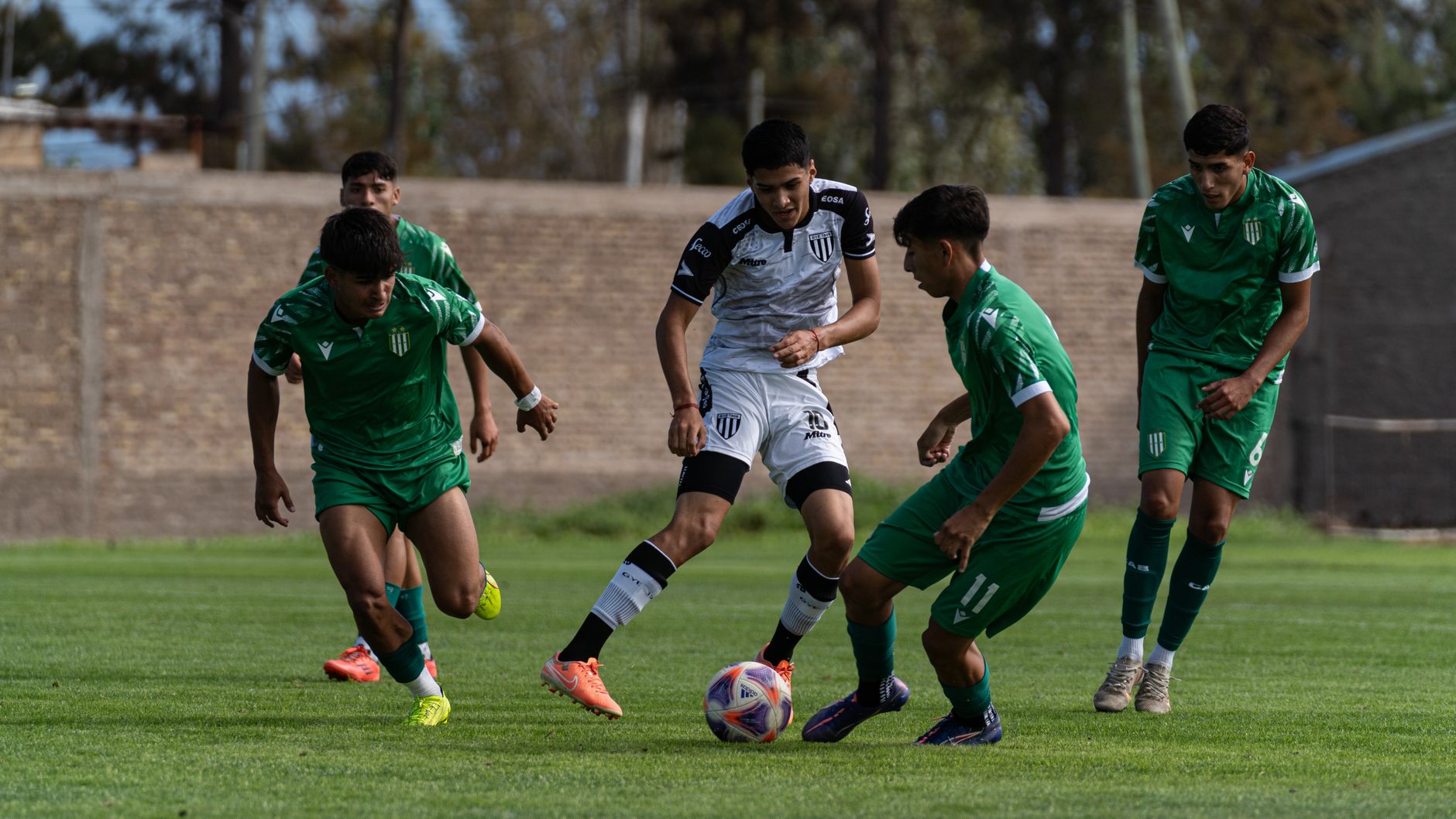
Photo by Franco Monsalvo on Pexels
For a deeper statistical lens, our [Internal Link: World Cup goal-difference and tie-breaker explainer] helps clarify why a 5–0 score can influence future qualification calculations even when the next match is unrelated.
Uzbekistan’s immediate priorities
- Stop conceding early: The first goal arrived after only six minutes, making the tactical plan reactive.
- Protect central spaces: Portugal repeatedly found routes toward Ronaldo and the attacking midfield line.
- Improve set-piece and defensive communication: The own goal at 60 minutes illustrates how pressure can compound errors.
- Collect points before chasing margins: A win is the first repair; a large win is a secondary objective.
- Review transitions: Losing shape after turnovers allowed Portugal to attack against an unsettled block.
The Asian Football Confederation provides broader regional context for Uzbekistan, but continental reputation cannot substitute for the current World Cup table. This is where many previews become sentimental: they discuss potential, history, and “pride” while neglecting the unpleasant arithmetic. Arithmetic, regrettably, remains undefeated.
See how the table mechanics affect the next prediction?
Round 3: What Should Bettors Read Into the 5–0 Result?
The 5–0 result suggests Portugal had a major tactical and finishing advantage, but it should be used as evidence rather than treated as a guaranteed template for every future match. The strongest signals are Portugal’s early scoring, four-point standing position, and ability to produce goals through Ronaldo, Mendes, and Leão.
For match analysis, separate three layers of evidence. First, the standings: Portugal have 4 points and Uzbekistan have 0, making Portugal the safer structural choice in a straight comparison. Second, the match process: Portugal scored three times before halftime and maintained pressure into the 87th minute. Third, the price or probability offered by a bookmaker: a strong football team can still be a poor betting selection if the market has already overreacted to a spectacular scoreline.
My own fixed principle is simple: never confuse a large win with infinite information. The 5–0 score tells us Portugal dominated this encounter; it does not tell us that Portugal will score five against every opponent, nor that Uzbekistan are incapable of defending better next time. A responsible forecast should compare expected lineups, venue, injuries, rest days, and opponent style. Anyone promising certainty because a scoreline looked expensive belongs nowhere near your bankroll.
The contrarian angle is especially relevant to total-goals markets. Portugal’s three first-half goals show attacking potency, but subsequent opponents may sit deeper from the opening whistle, reducing the space that made those early attacks so damaging. Uzbekistan, meanwhile, may prioritise a compact block after conceding twice inside 17 minutes. Therefore, a future Portugal over-goals selection can be statistically attractive yet tactically overpriced; check the line rather than applauding the previous result.

Photo by AlphaTradeZone on Pexels
A practical checklist for the next Portugal or Uzbekistan match
- Confirm the official standings immediately before kickoff.
- Check whether Portugal’s regular starters, including Ronaldo and Fernandes, are named.
- Compare the opponent’s defensive block with Uzbekistan’s 3-4-2-1 approach.
- Review first-half scoring trends, not only full-time results.
- Inspect the available odds against your estimated probability.
- Avoid parlays built solely around Portugal’s previous 5–0 score.
- Set a firm stake limit before watching the match.
Football Insights covers predictions and tournament developments, but the sensible reader remains in charge. In gambling, “confidence” is often just marketing wearing a tailored jacket. The responsible choice is to use verified figures, understand the market, and never stake money needed for essentials.
Round 4: How Does the Final Table Position Affect Qualification?
Portugal’s 4 points place them in a substantially stronger qualification position than Uzbekistan’s 0 points, but the final impact depends on the other teams’ results and the competition’s tie-break rules. Portugal should focus on converting their advantage into another positive result, while Uzbekistan need points immediately rather than merely a respectable performance.
If Portugal win their next fixture, they would move to 7 points; a draw would take them to 5, and a defeat would leave them on 4 while competitors could close the gap. Uzbekistan face the opposite calculation: a win would give them 3 points, a draw 1, and another defeat 0. Those are elementary projections, yet they are precisely the numbers that turn a dramatic match report into a useful standings analysis.
The full group table remains essential because Portugal’s place relative to third-party teams cannot be inferred from Portugal versus Uzbekistan alone. Goal difference may become decisive if teams finish level on points, and Portugal’s 5–0 victory could then be worth more than its immediate three points. However, if the official rules apply head-to-head criteria before goal difference, the value of that margin changes. Read the regulations; football does not award prizes for guessing the tie-breaker.
For readers seeking a disciplined framework, [Internal Link: responsible football prediction checklist] should sit beside the standings page, not beneath a pile of emotional match reactions. Compare team news, form, tactical matchups, and price. Then accept that uncertainty is part of the transaction. Even wealthy people dislike paying for poor information; there is no reason to make a hobby of it.
What should you take into the next round?
The Final Score & Who Should Pick What
Portugal are the clear standings pick after two matches: 4 points, an unbeaten record, and a 5–0 victory over Uzbekistan on June 23, 2026. Uzbekistan’s 0-point record makes their next fixture urgent, while Portugal can approach the next round from a position of control rather than desperation.
Pick Portugal when:
- You are comparing the teams on current standings alone.
- You value an unbeaten record over speculative potential.
- You believe Portugal’s attacking depth can create another positive result.
- The available price still reflects realistic probability rather than the previous scoreline.
Consider caution when:
- Portugal rotate Ronaldo, Fernandes, or other central starters.
- The market prices a repeat five-goal performance.
- The opponent defends deeper and concedes fewer early chances.
- You are relying on the head-to-head score without checking the complete group table.
Pick Uzbekistan only with a specific argument:
Uzbekistan should not be selected merely because they are “due” a result. A credible case would require confirmed lineup improvements, a favourable tactical matchup, evidence of better defensive organisation, and odds that compensate for their 0-point start. Hope is not a model, and it has an atrocious long-term return.
The final verdict from Football Insights is therefore measured but firm: Portugal own the superior position in the Portugal national football team vs Uzbekistan national football team standings, and the 5–0 result reinforces that conclusion. Still, the next decision should be based on current information, not on the intoxicating afterglow of one emphatic scoreline.
Ready to review the latest tournament insights?
Frequently Asked Questions
Q: What are the Portugal national football team vs Uzbekistan national football team standings?
A: Portugal have 4 points from two matches, while Uzbekistan have 0 points from two matches. Portugal’s listed record is one win, one draw, and no defeats, whereas Uzbekistan have lost both matches. The recorded June 23, 2026 meeting finished Portugal 5–0 Uzbekistan, giving Portugal a major goal-difference advantage as well.
Q: How did Portugal reach 4 points in the standings?
A: Portugal reached 4 points through one win and one draw across their first two FIFA World Cup matches. Their record is listed as 1-1-0, with four points from a possible six. The 5–0 victory over Uzbekistan supplied the win, while the remaining point came from Portugal’s earlier draw.
Q: What was the final Portugal vs Uzbekistan score?
A: Portugal defeated Uzbekistan 5–0 on June 23, 2026. Cristiano Ronaldo scored in the 6th and 39th minutes, Nuno Mendes scored in the 17th, Abduvohid Nematov was credited with an own goal in the 60th, and Rafael Leão scored in the 87th minute. The result left Portugal unbeaten and Uzbekistan pointless.
Q: Is Portugal the better pick than Uzbekistan?
A: Portugal is the stronger pick based on the available standings and match evidence. Portugal have 4 points, an unbeaten record, and a 5–0 head-to-head win, while Uzbekistan have 0 points after two defeats. A responsible prediction should still check confirmed lineups, opponent quality, venue, injuries, and the odds before any decision.
Q: Why does the 5–0 score matter for the standings?
A: The 5–0 score may matter because goal difference can be used as a tie-breaker when teams finish level on points. Portugal gained three points and a large positive margin, while Uzbekistan suffered a substantial negative swing. The exact priority of goal difference depends on the official FIFA World Cup competition regulations, so readers should verify the applicable rules.
Q: What should Uzbekistan do after starting with 0 points?
A: Uzbekistan must prioritise earning points in the next match, beginning with defensive stability and better protection of central areas. A win would move them to 3 points, while a draw would provide 1 point and another defeat would leave them on 0. Chasing goal difference before securing a result would be strategically backwards.
Q: Where can I check updated Portugal and Uzbekistan standings?
A: Check the official FIFA competition pages and reputable match databases such as ESPN for updated standings, results, and lineups. Confirm the table after every match because points, goal difference, and qualification positions can change quickly. Football Insights can provide interpretation, but the official competition record should remain the final reference.
END_OF_DISPATCH
Thanks for reading this article from our archive.